Season tracker · Tue 27 Oct 2026
Cherry Blossom Forecast 2027: the tracker
Korea's blossom season runs from Jeju in late March to Seoul in mid April, and it moves fast. This tracker follows the 2027 season from the long run pattern to the official forecast and the festival dates, city by city, as each is announced.
Cherry blossom in Korea is a moving target. The season opens in the far south in late March, crosses the country in about a fortnight, and is finished in Seoul by mid April, and a windy week can end a city's bloom in days. This page is our tracker for the 2027 season. It will carry the official forecast city by city when that forecast is published, then the festival dates as organisers announce them. Until those land, what follows is the pattern the season follows, drawn from official tourism sources, with spring 2026 as the most recent worked example.
Where the 2027 season stands
As of late October 2026, there is no 2027 forecast and there are no confirmed 2027 festival dates. The season forecast, published by Visit Korea with data from the forecasting firm Weather i, appears closer to spring, and festival dates follow it. Anyone quoting exact 2027 blossom dates now is guessing. One caution from the most recent season: in 2026 the blossoms opened two to seven days earlier than the long run average, so treat the windows below as a planning guide, not a promise.
How the front moves
The 2026 forecast shows the shape of a normal year. First bloom came to Jeju and Busan on 25 March, then to Jeonju and Gyeongju on 28 March, then Gangneung on 1 April, Seoul on 3 April and Incheon on 7 April. Peak bloom follows about a week after the first flowers open: in 2026 Jeju reached full bloom just after 1 April and Seoul around 10 April. So the practical windows are late March for Jeju and the south coast, the first days of April for Gyeongju and the middle of the country, and the second week of April for Seoul. Heavy rain at peak can end a display in a day or two, which is why the forecast update matters more than the averages.
Jinhae: the festival that anchors the season
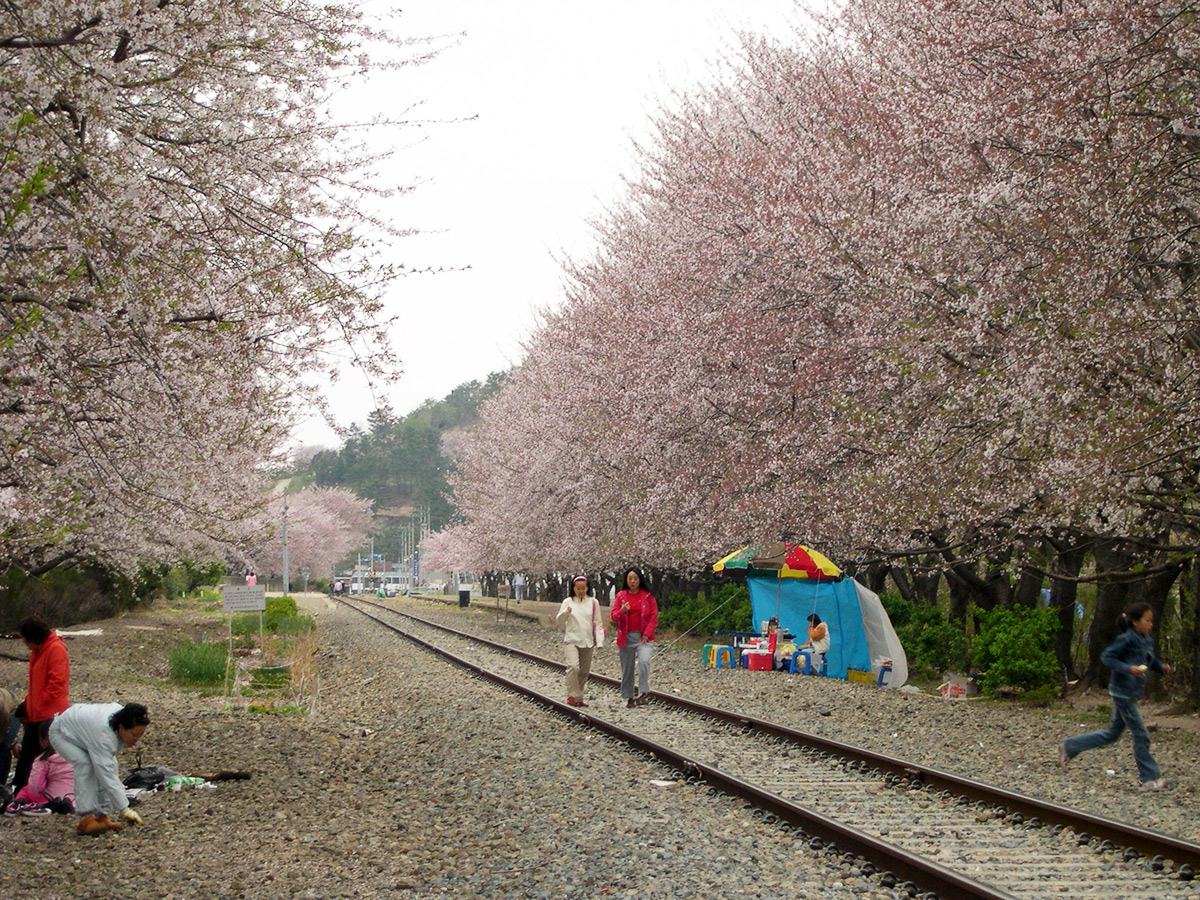
Visit Korea calls Jinhae, a district of Changwon on the south coast, the country's premier cherry blossom destination, and the numbers explain why: around 360,000 cherry trees, a 1.5 kilometre blossom tunnel over Yeojwacheon Stream, and 800 metres of cherry lined track at Gyeonghwa Station, where the classic photograph of the season is taken. The Jinhae Gunhangje Festival began as a memorial ceremony for Admiral Yi Sun-sin in 1952 and has run as a full festival since 1963. During the festival the Korea Naval Academy grounds, normally closed, open to the public, alongside a military band and honour guard festival. The festival's own figures put attendance at more than two million visitors a year, and admission is free. The 2026 edition ran from 27 March to 5 April. The 2027 dates are not announced yet; expect a similar late March start, confirmed here when Changwon publishes them.
Jeju: king cherry country
Jeju blooms first, and its blossom is a different tree. The king cherry is native to the island and carries larger petals than the varieties planted on the mainland. In Jeju City, Jeonnong-ro runs 1.2 kilometres of king cherry about ten minutes from the airport, and the road closes to traffic during the island's cherry blossom festival in late March. South of the city, Noksan-ro pairs cherry trees with yellow canola flowers along roughly ten kilometres of road, a combination Visit Korea lists among the 100 most beautiful roads in Korea. With first bloom on 25 March in 2026 and full bloom just after 1 April, a Jeju trip wants the last days of March.
Seoul: Yeouido, Seokchon Lake and Namsan
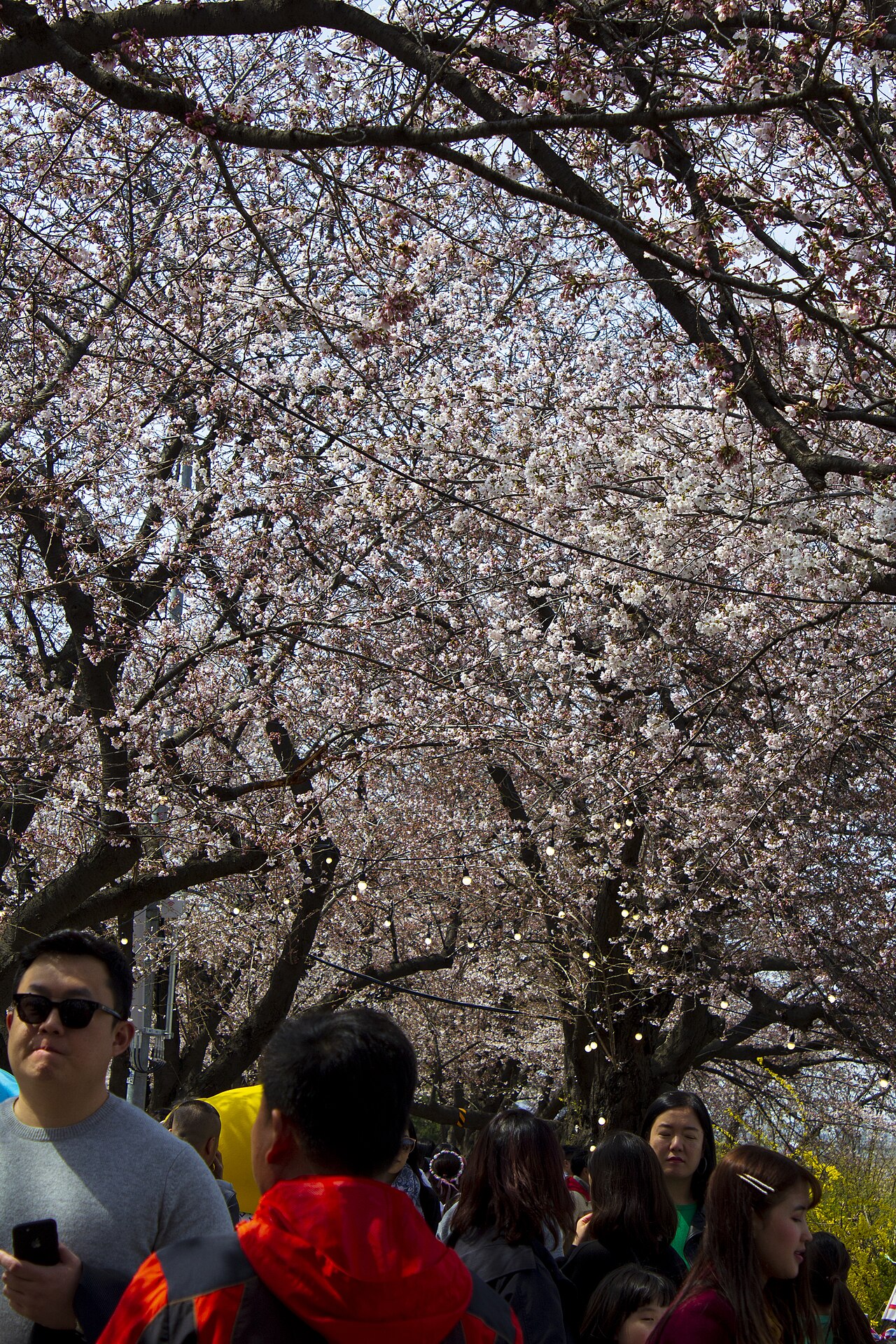
The capital's centrepiece is Yeouido, where Yunjung-ro runs 1.7 kilometres behind the National Assembly under around 1,800 cherry trees. The Yeongdeungpo Yeouido Spring Flower Festival closes the road to traffic for the peak days; the 2026 edition ran from 3 to 7 April, and the nearest stations are Yeouinaru on Line 5 and National Assembly on Line 9. Go early in the morning or after dark, when the trees are lit and the crowds thin.
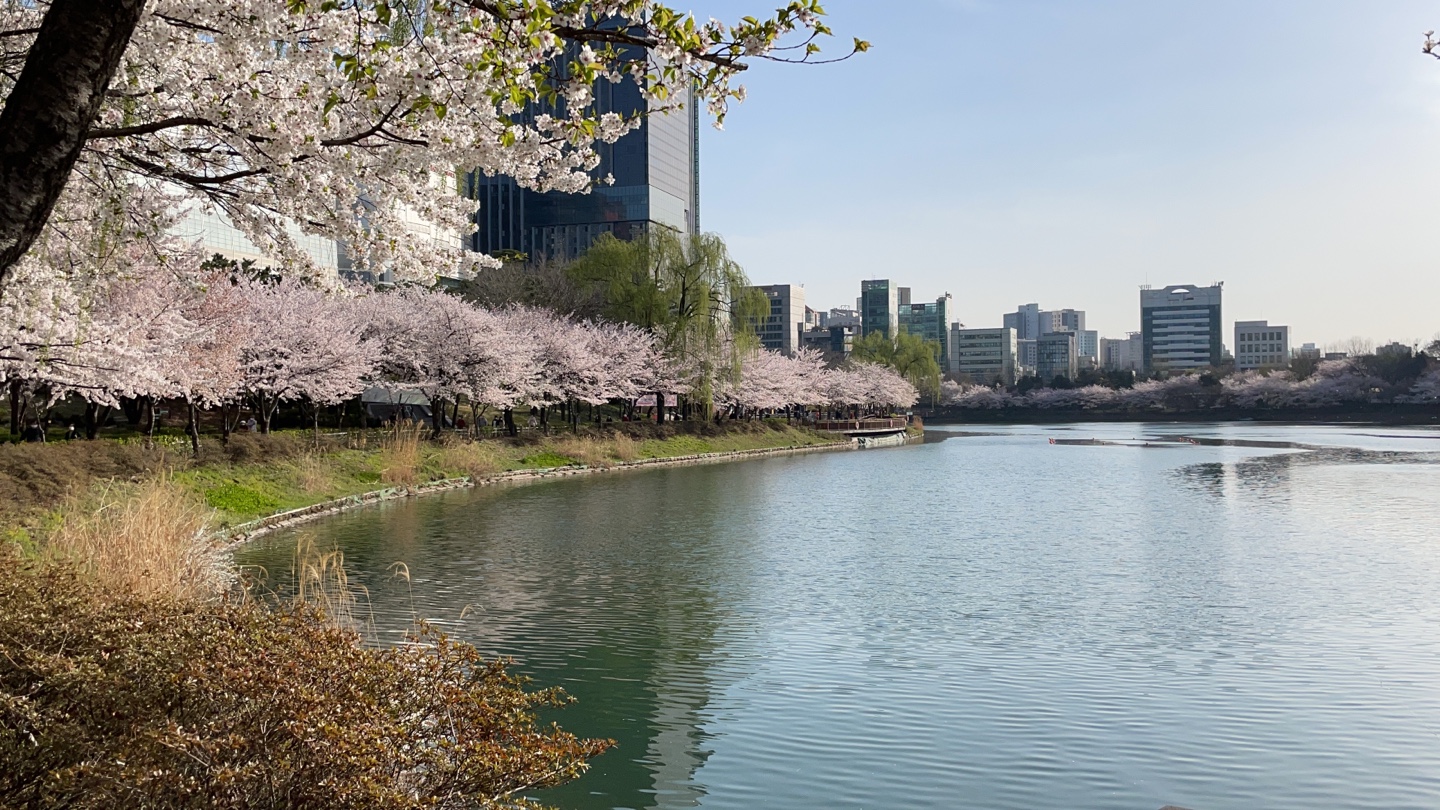
Across the river in Jamsil, Seokchon Lake is ringed with cherry trees beside Lotte World and the Lotte World Tower, and holds its own blossom festival in the same early April window. For a quieter walk, the paths of Namsan, climbing to N Seoul Tower in the middle of the city, are lined with cherry trees that bloom on Seoul's timetable, roughly the second week of April in a typical year.
Gyeongju, and Busan's late second chance
Gyeongju, the old Silla capital in the south east, blooms with the southern group: first flowers on 28 March in the 2026 forecast. The blossom frames the ring road around Bomun Lake and the streets of the historic centre, and the city holds its own cherry blossom festival in that window. If you miss the main season, Busan offers a late card: the double cherry blossoms of Democracy Park flower from mid to late April, and in 2027 they overlap the Busan International Short Film Festival, which runs 22 to 27 April.
Planning around the crowds
Three habits make the season easier. Go on a weekday, because the famous sites fill with domestic day trippers on Saturdays. Go early, because tour buses reach Jinhae and Yeouido by mid morning and the light is better before they arrive. And book rooms early in Seoul and Busan for the peak weekends, keeping plans loose enough to shift a day either way when the forecast firms up; our hotels page covers the main bases. The Seoul Marathon on 21 March 2027 lands just before the capital blooms, so runners see the city bare and blossom chasers should aim a fortnight later. The full spring picture is on the spring season page and in the events calendar.
What this page will update
When the official 2027 forecast is published, the city by city first bloom and peak dates go in at the top of this page. Festival dates follow as each organiser announces them, and the events calendar takes the confirmed listings. If you are planning now, plan on the windows above, keep the booking flexible, and check back here as spring approaches.
More reading on the articles page, or go straight to the events calendar.